Most people read food labels carefully. Yet far fewer check the inactive ingredients in their medications, or realize that custom medication compounding is an option if they want to avoid ingredients they may be sensitive to. It’s a fact that in many tablets and capsules, the inactive ingredients make up most of what a person swallows. For people with allergies, intolerances or sensitivities, those extra ingredients can cause real problems. Compounding gives patients a way to get the medication they need without the ingredients they can’t have.
What Are Inactive Ingredients in Medications?
Inactive ingredients (also called excipients) are all substances in a medication besides the drug itself. Excipients include fillers that add bulk, binders that hold a tablet together, colors, flavors, coatings, sweeteners, and preservatives. Inactive ingredients do not treat your condition, but they help a medication hold its shape, stay stable, and look and taste a certain way.
These ingredients are harmless for most people, but for others they’re the reason a medication causes symptoms that have nothing to do with the drug.
Common Medication Ingredients That Can Cause Problems
- Lactose – One of the most widely used fillers in tablets and capsules. The amount is usually small, but people with significant lactose intolerance or a milk allergy may still react.
- Dyes – Synthetic colors such as FD&C Red No. 40 and Yellow No. 5 (tartrazine) are used to make pills recognizable. Some people experience hives, itching or other reactions upon ingestion.
- Gluten – Gluten-containing starches are uncommon in medications, but prescription drugs are not labeled for gluten the way that foods are. That uncertainty is stressful for people with celiac disease.
- Peanut and Soy Oils – Some capsules use these oils as a base. A well-known example is commercial oral micronized progesterone, which contains peanut oil.
- Sugar and Alcohol – Common in liquid medications, and a concern for children and people with diabetes, as well as anyone avoiding alcohol.
- Gelatin – Most capsules are made from animal-derived gelatin, which may not fit vegan, vegetarian, or certain religious dietary practices.
- Preservatives – Ingredients like parabens or sulfites can trigger sensitivities in some patients.
How Compounding Helps Patients With Allergies and Sensitivities
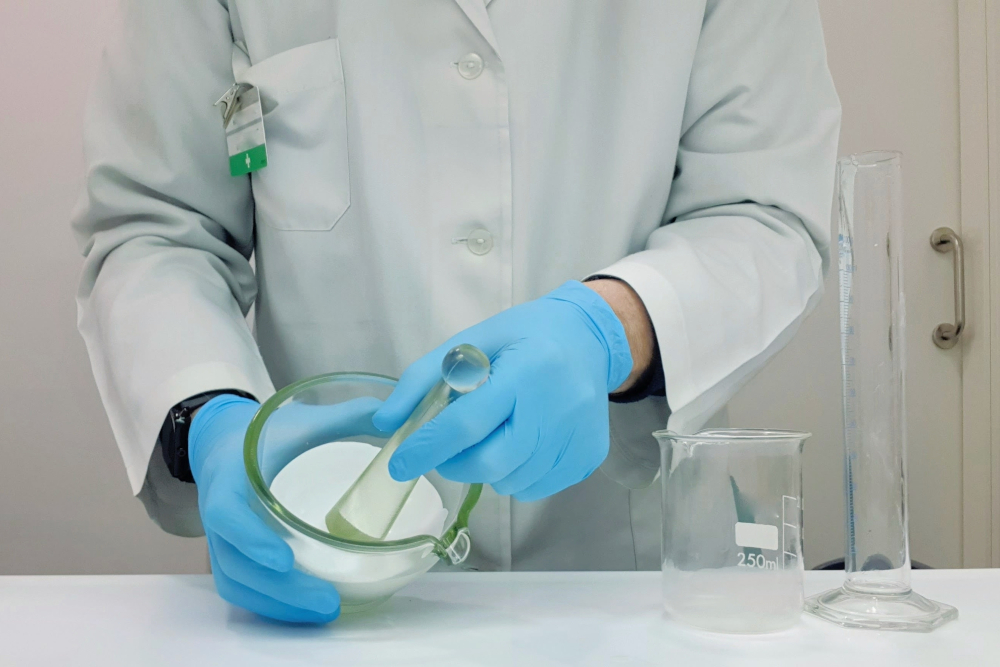
A compounding pharmacist can prepare the same active ingredient your provider prescribed using a different set of inactive ingredients, depending on the medication. With compounding pharmacy services you can receive medications that are custom formulated to accommodate your specific allergies, sensitivities, or ingredient restrictions.
- Capsules made with a hypoallergenic filler instead of lactose.
- Dye-free capsules, tablets and liquids.
- Plant-based capsules rather than animal-based gelatin.
- Medications compounded in an oil base that avoids peanut and soy.
- Sugar-free, alcohol-free, or preservative-free liquids.
The active ingredient and dose stay the same – what changes is everything around it.
Who Can Benefit From Allergy-Friendly Compounded Medications?
When you suffer from certain allergies or sensitivities, you may not be able to tolerate the inactive ingredients used in standard medications, and finding a suitable alternative can be a challenge. Allergy-friendly compounding can be especially helpful for people with the following conditions.
- Celiac disease or gluten sensitivity.
- Lactose intolerance or a milk allergy.
- Sensitivities to dyes or preservatives.
- Peanut or soy allergies.
- Diabetes or other reasons to avoid sugar.
- Vegan, vegetarian, kosher or halal dietary needs.
- Children who react to ingredients in commercial liquids.
By adjusting the inactive ingredients that medications contain, compounding can help individuals with allergies, sensitivities or dietary restrictions access treatment that better meets their needs.
What to Do When You Suspect an Allergic Reaction to Medication
When you notice symptoms like rash, hives, stomach upset or headaches after starting a new medication or after switching to a different manufacturer’s version, don’t stop taking it on your own. Talk with your provider or pharmacist first.
Our pharmacists offer one-on-one medication consultations and can review the inactive ingredients in everything you take. Sometimes the solution is as simple as switching to a different commercial manufacturer. When that isn’t an option, we can work with your provider on a compounded alternative.
If you ever experience trouble breathing or swelling of the face, lips or throat, call 911 immediately.
When to Consider Compounded Medications
Compounding is meant for patients whose needs cannot be met by a commercially available product. Before recommending a compounded medication, our team checks whether an allergy-friendly commercial option already exists. If one does, we’ll tell you, and if not we’ll prepare a formulation designed around your specific restrictions.
Ask Eli Pharmacy About Allergy-Friendly Compounding
If you’ve ever wondered what’s really in your medications, we’re happy to help you find out. We serve patients throughout Alpharetta, Duluth, Suwanee, Milton, Norcross, Peachtree Corners and Berkeley Lake with free local delivery. Call Eli Pharmacy at (678) 835-9997 or contact our pharmacy today.